
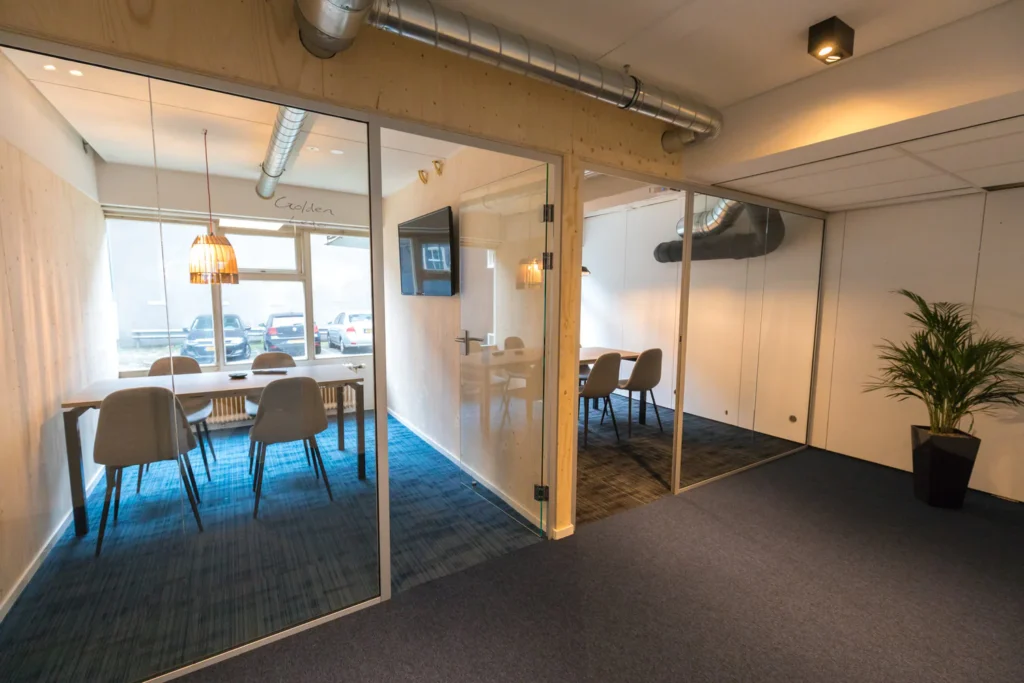
In short: nowadays, four generations often work side by side in most offices—from young starters in their early twenties to employees who continue working well past their mid-60s. Each generation grew up with a different work culture and thus has different expectations of an office: baby boomers often value privacy and a fixed spot, while Gen Z expects openness, flexibility, and space for well-being. An office that works for everyone doesn’t favor one generation but offers a mix of workstations from which anyone can choose.
Why are more generations than ever working together in the office today?
Dutch people are working longer than ever. According to CBS, the average retirement age in 2025 was 66 years and 4 months, an increase of over two and a half months compared to 2024. The share of employees retiring before the age of 67 decreased from 46 percent in 2024 to 40 percent in 2025. Self-employed individuals work even longer on average: in 2023, their average retirement age was 68 years and 9 months.
The result: colleagues in their early twenties often work alongside colleagues nearing their late 60s or early 70s. In practice, that means four generations under one roof, each shaped by different eras, technologies, and perspectives on work.
The four generations in the workplace
| Generation | Birth years |
|---|---|
| Baby boomers | 1946 to 1964 |
| Generation X | 1965 to 1980 |
| Millennials (Generation Y) | 1981 to 1996 |
| Generation Z | 1997 to 2012 |
This layout is a commonly used rule of thumb, not an exact science: the transition between generations is gradual, and individual preferences always vary. However, there are recognizable patterns in what each generation expects from a workplace.
What does each generation expect from the office environment?
Baby Boomers often started their careers with their own desk or office and may find a fully open office landscape more disruptive than pleasant. They tend to value privacy more strongly, such as through a quiet corner or a soundproof booth for client meetings.
Generation X typically prefers to work independently and values a good work-life balance. Spaces where you can work undisturbed and focused, such as a quiet zone or acoustically shielded workspace, align well with this generation.
Millennials grew up with a more informal work culture and appreciate an office that feels more like a living room than a corporate space: comfortable seating, natural light, plants, and a place for informal discussions, such as a lounge- or cafeteria-like area.
Generation Z is the first fully digital-native generation to enter the workforce and expects an open, transparent environment with space for collaboration, but also sufficient quiet areas and privacy to avoid overstimulation. Flexibility in furniture and layout (for hybrid work) and attention to sustainability and inclusivity are particularly important for this generation.
These differences are trends, not strict rules: there are plenty of baby boomers who actually love an open office lounge, and plenty of Gen Zers who prefer a fixed, quiet spot over flexible working.
Practical tips for a multigenerational office
The key is not choosing in favor of one generation, but offering variety within the same office:
- Combine open and enclosed workspaces. A mix of an open office lounge, quiet work corners, and private rooms gives everyone the flexibility to choose what suits the task and the individual.
- Ensure sufficient phone booths and quiet spaces. Both baby boomers (phone calls) and Generation Z (preventing overstimulation) benefit from well-acoustically shielded areas to retreat for a while.
- Create space for informal intergenerational contact. An appealing lounge or cafeteria area encourages the kind of informal conversations where knowledge is most easily shared between older and younger colleagues.
- Invest in flexible, movable furniture. This supports both hybrid work (important for younger generations) and a fixed, predictable spot for those who prefer it.
- Just ask. The preferences in this article are general trends; a brief workspace survey or employee satisfaction survey will map the actual distribution within your own team, rather than relying on assumptions.
Is it a problem if generations want different things?
Not necessarily. An office doesn’t have to choose between being designed “for young” or “for old”: most complaints arise when an office offers only one type of workspace, such as a fully open-plan office without any quiet spaces, or conversely, an office filled with enclosed rooms without a place for collaboration. An office with a good mix of zones—from quiet and private to open and informal—gives every generation the space to be productive in their own way. This also aligns with how many companies are rethinking their offices post-coronavirus, as we previously described in our article on return to office and hybrid work.
Frequently asked questions
How many generations are currently working together in the office?
In practice, up to four generations are working side by side in many Dutch offices: baby boomers, Generation X, millennials, and Generation Z. As people are working longer (on average until age 66 years and 4 months in 2025, according to CBS), the age diversity on the work floor is only increasing.
What is the key difference between Generation Z and baby boomers in the office?
Baby boomers value privacy and a fixed, recognizable workspace relatively highly. Generation Z has grown up with a more open, flexible work culture but also needs sufficient quiet spaces to avoid overstimulation.
Why is attention to generational differences in the workplace important?
Because generations often unconsciously have different expectations regarding workspaces, meeting formats, and flexibility. Without recognizing these differences, an office quickly emerges that works for one group but not for another, which affects collaboration and employee satisfaction.
How do you design an office that works for all ages?
By offering variety instead of choosing one solution: a mix of open workstations, quiet zones, phone booths, and informal meeting spaces gives every generation the option that suits their own work style.
Sources
- CBS: The average retirement age continues to rise (figures from Centraal Bureau voor de Statistiek, 23 April 2026)
- Randstad: Generations in the Workplace
- Hush Office: What Does Each Generation Want from the Office
Pumping and prayer rooms, acoustics, and full furnishing. We respond within 1 business day.
Last updated on 7 November 2026 by Stijn Belmans